On a recent trip to visit my family in Singapore, I recall standing in front of Bangkit Station below the beautiful Masjid Al-Iman at dusk. As the Maghrib adhan reverberated into the street, hundreds of people filed quietly from the station towards the mosque. While I had walked by this mosque hundreds of times, something that I had never seen before caught my eye – the flyers. Flyers advertising mutual aid campaigns for Palestine, on every pillar as far as I could see. It looked less like disciplinarian Singapore, where activism is kept on a tight leash, and more like the scarlet red blocks of North Brooklyn.
Singapore is currently experiencing a cultural moment for Palestine. Activist organizations, forced by the state to operate in the shadows for decades, have recently begun openly organizing around BDS-oriented initiatives on the island. I was surprised by the positive reception and grassroots energy for a recent push by Singapore’s nascent BDS movement to boycott Pink Fest, one of the island’s most iconic summer events, over its ties to Israeli companies. While Singapore – perhaps the most Muslim country outside of the Arab World to have a strategic diplomatic relationship with Israel – has long avoided more than minor discomfort around the government’s strong ties to the Zionist occupation, headwinds are against the ruling party’s Israel policy.
This anti-Zionist moment has coincided with a period of increased political discontent within Singapore’s Muslim electorate. The country’s 2025 general election featured a marquee race in Tampines between opposition MP Faisal Manap and the government’s Minister of Muslim Affairs, Masagos Zulkifli. Manap and other opposition candidates ran publicly on supporting a re-evaluation of the country’s relationship with Israel, forcing a conversation that has long been avoided in Singapore. In a constituency that the ruling party has never come close to losing, Manap’s slate came within 6,392 votes of victory.
The opposition’s willingness to run openly on Muslim issues has not come without its controversy. Since the election, the ruling party has accused the Leader of the Opposition, Pritam Singh, for impropriety over giving an interview to Malaysian media. And the state has not let up its austere dismissal of local protest activists, with three leaders of Students for Palestine Singapore currently facing criminal charges for leading an unpermitted procession to the Istana.
But despite the intractable organizing conditions, the recent resurgence in organizing for Palestine in Singapore poses a helpful reminder – people are moving to action all around the world, even when it is most difficult and unrewarding to do so.
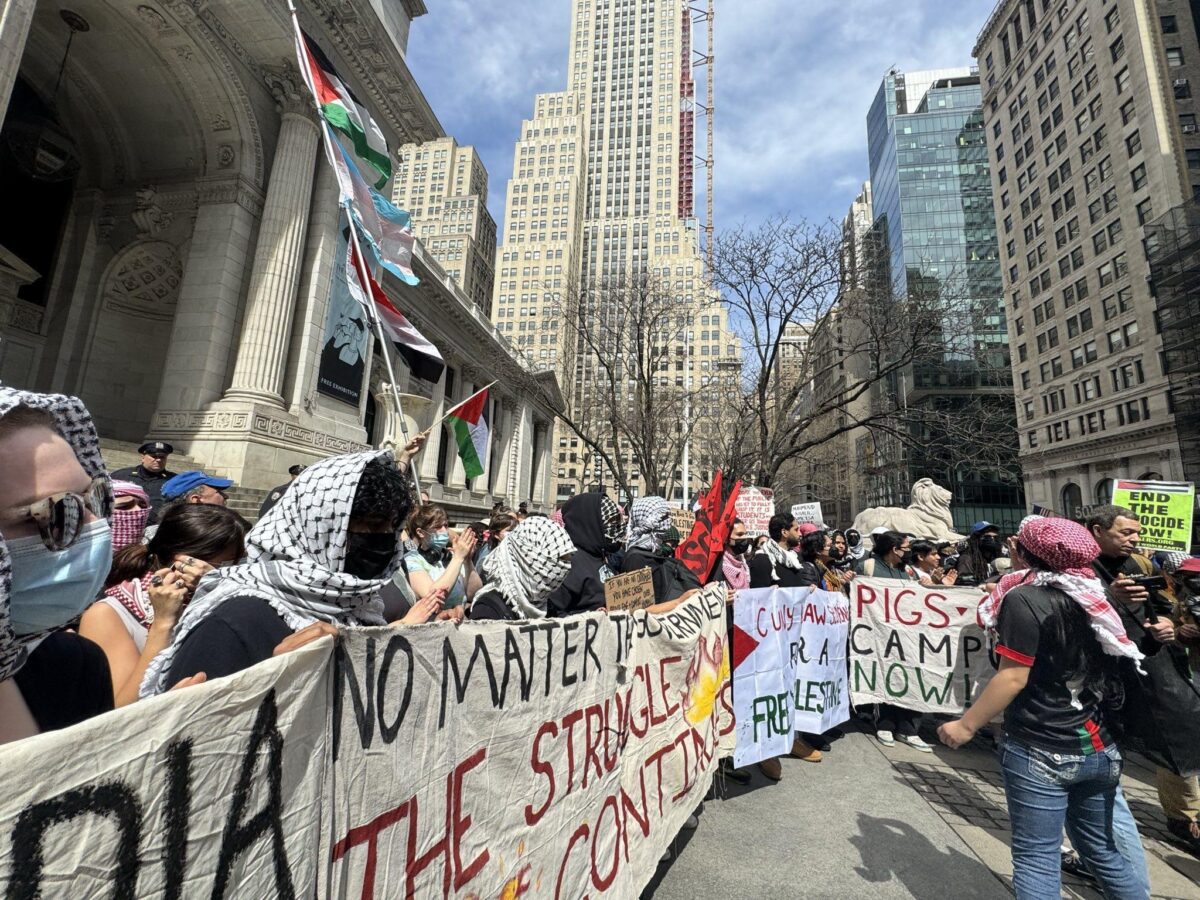
As organizers for Palestinian liberation in the imperial core, we are in need of constant reminders that the repression we face is not unique or exceptional – it is part of a broader machinery aiming to dismantle our movement both domestically and internationally. No doubt, we face terrifying obstacles to our work in the United States. I am haunted constantly by the NYPD sweep at the Hussam Abu Safiya sit-in at Barnard College. I remember standing on Futter Field in pouring rain surrounded by spectators as Mahmoud Khalil put himself in between hundreds of police in riot gear and the students, yelling at the top of his lungs in a heroic effort to de-escalate. But our comrades across the world are assembling and forcefully confronting these opponents with conviction and bravery, and we have a shared duty to do so.
Another Columbia organizer, Fadi Shuman, put it well – we are not doing enough.
For years, Palestinians have exemplified the tactics of resistance eloquently outlined by Basel Al-Araj – ‘live like a porcupine, fight like a flea’. Like the porcupine, Palestinians have endured horrific genocide, their collective will to resist never wavering, and yet they have simultaneously fought like a flea, waging a resistance on many fronts and exhausting their enemy in all areas and in an intentional manner. During the First Intifada, Palestinian consumers and businesses executed targeted boycott days, collected and moved supplies for resistance forces, disrupted the flow of movement across the occupied territories, and engaged in a wide range of civil disobedience and largely peaceful demonstration in conjunction with confrontational protest. Through an all-encompassing mapping of forces and institutions to contest across their civil society and state, Palestinians have taken Al-Araj’s words to heart.
Organizers in the United States have attempted to employ tactics such as one-off consumer strikes, but these approaches have failed to take root not because we have not built a growing hegemony in support of Palestinian liberation in many sections of the working class, but because we have not built the necessary discipline, coordination, and organization to meet our aims. We have flirted with fighting like a flea, but have not yet learnt how to live like the porcupine.
As the “Uncommitted” movement showed, electoral campaigns are a crucial arena of struggle in the fight for a free Palestine. The Gaza solidarity encampments demonstrated that universities are another such arena. But the strategic limitations of these campaigns, and others steered by the Palestine solidarity movement, simultaneously show that we will disrupt the American war machine most successfully when we embrace a diversity of tactics.
Organizing the masses to enforce the picket lines of the BDS movement is not only a task to be relegated to one campaign or organization, but a task that must be undertaken through a grassroots and geographically diffused approach. A recent campaign against a priority target of the BDS movement, Chevron, has seen success in putting pressure on shareholders by reaching gas stations. But a multinational behemoth like Chevron also has countless commercial sponsorships, expansive scholarship and job fair programs at universities, and a litany of investments from a long list of institutions, including unions and local governments. Approaching these targets, while eminently necessary, is not possible at scale unless we widen our thinking and mobilize people across many offensive avenues.
The Palestinian labor movement, seasoned from the First Intifada in its ability to engage in sectoral action, is today one of the most capable arms of BDS call. As we fight for an arms embargo, we must organize in our unions not only in service of legislative pressure campaigns, but by using every avenue at our disposal to contest organs within and beyond the labor movement and move them into action.
Similarly, our attempts to politicize Palestine in the electoral arena must recognize that challenging a key component of imperial capital’s hold on state power is strategic because it is one of many fronts in which we are positioned to ‘fight like a flea’ and exhaust our enemy’s capability. When we contest elections, our objective must not only be to move our opponents to stronger positions, but to organize a strong counterweight to the political influence of our adversaries through principled organizational lines and a willingness to enforce them. Recent campaigns, such as Zohran Mamdani’s electrifying primary win in the race for New York City mayor, show that far from being a liability, unfaltering solidarity with Palestine resonates deeply with voters.
As I stood beneath the Masjid, I received dozens of excited texts from comrades at Columbia sharing the release of Mahmoud Khalil from federal custody. We will free Palestine within our lifetimes, but only if we do more. We are not doing enough.
The wide-reaching, decades-long resilience of the Palestinian people as they bear a brutal genocide from Israel and its occupation forces has galvanized a mass international movement not only because it is inspirational, but also because the Palestinian resistance offers us crucial lessons about how to win our own liberation. In following the Palestinian example, we must organize in our workplaces, business, civil society organizations, neighborhoods, universities, local governments, and beyond. We must continue to do the work, and refuse to waver in the face of terrifying persecution.
Our intentional organizing over the last two years has brought our government’s cowardly complicitness in the genocide of Palestinians from a political question on the margins to a mainstream issue. As we continue to grow more effective and better organized, it is only natural that the state will accelerate its attempts to quash the movement. We face great obstacles and chilling repression, but we have come this far – and we will win.
Ethan E is the co-chair of Columbia-Barnard YDSA
